Chestnut, Chinese
Chinese Chestnut (Castanea mollissima)
The Chinese Chestnut is a fast-growing, deciduous tree prized for its edible nuts, glossy green foliage, and adaptability. Native to China and Korea, this resilient tree is known for producing delicious, sweet chestnuts, making it a popular choice for edible landscapes, food forests, and permaculture designs. With its ability to thrive in a variety of soils and its resistance to chestnut blight, the Chinese Chestnut is an excellent option for growers seeking a reliable nut tree with ecological and economic value.
Key Characteristics
-
Edible, Sweet Chestnuts
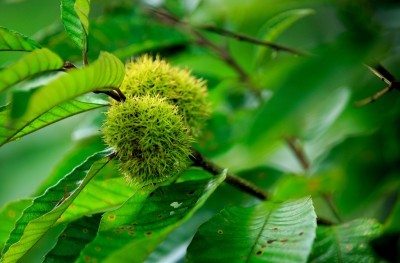
Chinese Chestnut produces large, sweet, and flavorful nuts that ripen in late fall (September to October). The nuts are encased in spiny burs, which split open when mature. These chestnuts are perfect for roasting, baking, or milling into flour, making this tree a valuable addition to edible landscapes and orchards. -
Blight Resistance
Unlike the American Chestnut, the Chinese Chestnut has a natural resistance to chestnut blight (Cryphonectria parasitica), making it a dependable and long-lived choice for nut production and ecological restoration projects. -
Wildlife Value
The nuts are a favorite food source for wildlife, including deer, squirrels, and turkeys. Its dense canopy also provides excellent shade and shelter for birds and small mammals, enhancing biodiversity in the landscape. -
Resilient and Adaptable
Chinese Chestnut is highly tolerant of poor, acidic, or sandy soils, as long as they are well-drained. It thrives in full sun and is drought-tolerant once established. This tree is an excellent choice for a variety of growing systems, including orchards, silvopasture, and food forests. -
Attractive and Functional in the Landscape
Beyond its nut production, Chinese Chestnut features broad, spreading branches, creating a dense, rounded canopy that provides ample shade. Its glossy, serrated leaves offer a fresh green appearance in summer, turning golden in fall, adding seasonal beauty to any landscape.
Product Details
- Native Range: China and Korea
- Plant Life Cycle: Perennial, Deciduous Tree
- Sun Requirements: Full sun
- Soil Requirements: Well-drained soils; tolerates poor, acidic, or sandy soils
- Mature Height: 40-60 feet
- Bloom Time: June to July
- Bloom Color: Yellowish-green catkins (fragrant)
- Fruit Characteristics: Large, sweet chestnuts encased in spiny burs; ripens in late fall
- Fruit Uses: Roasting, baking, flour milling
- USDA Hardiness Zones: 4-8
- Pollination Requirements: Partially self-fertile, but planting two or more trees improves nut production (wind-pollinated).
Chinese Chestnut is a highly productive, resilient tree that combines ecological and economic value with beauty. Whether you're establishing a food forest, orchard, or permaculture system, this dependable nut tree is a must-have for sustainable and productive landscapes.
Original: $29.95
-65%$29.95
$10.48Product Information
Product Information
Shipping & Returns
Shipping & Returns
Description
Chinese Chestnut (Castanea mollissima)
The Chinese Chestnut is a fast-growing, deciduous tree prized for its edible nuts, glossy green foliage, and adaptability. Native to China and Korea, this resilient tree is known for producing delicious, sweet chestnuts, making it a popular choice for edible landscapes, food forests, and permaculture designs. With its ability to thrive in a variety of soils and its resistance to chestnut blight, the Chinese Chestnut is an excellent option for growers seeking a reliable nut tree with ecological and economic value.
Key Characteristics
-
Edible, Sweet Chestnuts
Chinese Chestnut produces large, sweet, and flavorful nuts that ripen in late fall (September to October). The nuts are encased in spiny burs, which split open when mature. These chestnuts are perfect for roasting, baking, or milling into flour, making this tree a valuable addition to edible landscapes and orchards. -
Blight Resistance
Unlike the American Chestnut, the Chinese Chestnut has a natural resistance to chestnut blight (Cryphonectria parasitica), making it a dependable and long-lived choice for nut production and ecological restoration projects. -
Wildlife Value
The nuts are a favorite food source for wildlife, including deer, squirrels, and turkeys. Its dense canopy also provides excellent shade and shelter for birds and small mammals, enhancing biodiversity in the landscape. -
Resilient and Adaptable
Chinese Chestnut is highly tolerant of poor, acidic, or sandy soils, as long as they are well-drained. It thrives in full sun and is drought-tolerant once established. This tree is an excellent choice for a variety of growing systems, including orchards, silvopasture, and food forests. -
Attractive and Functional in the Landscape
Beyond its nut production, Chinese Chestnut features broad, spreading branches, creating a dense, rounded canopy that provides ample shade. Its glossy, serrated leaves offer a fresh green appearance in summer, turning golden in fall, adding seasonal beauty to any landscape.
Product Details
- Native Range: China and Korea
- Plant Life Cycle: Perennial, Deciduous Tree
- Sun Requirements: Full sun
- Soil Requirements: Well-drained soils; tolerates poor, acidic, or sandy soils
- Mature Height: 40-60 feet
- Bloom Time: June to July
- Bloom Color: Yellowish-green catkins (fragrant)
- Fruit Characteristics: Large, sweet chestnuts encased in spiny burs; ripens in late fall
- Fruit Uses: Roasting, baking, flour milling
- USDA Hardiness Zones: 4-8
- Pollination Requirements: Partially self-fertile, but planting two or more trees improves nut production (wind-pollinated).
Chinese Chestnut is a highly productive, resilient tree that combines ecological and economic value with beauty. Whether you're establishing a food forest, orchard, or permaculture system, this dependable nut tree is a must-have for sustainable and productive landscapes.