Lettuce, Red Iceberg
Lettuce, Red Iceberg (Lactuca sativa ‘Red Iceberg’)
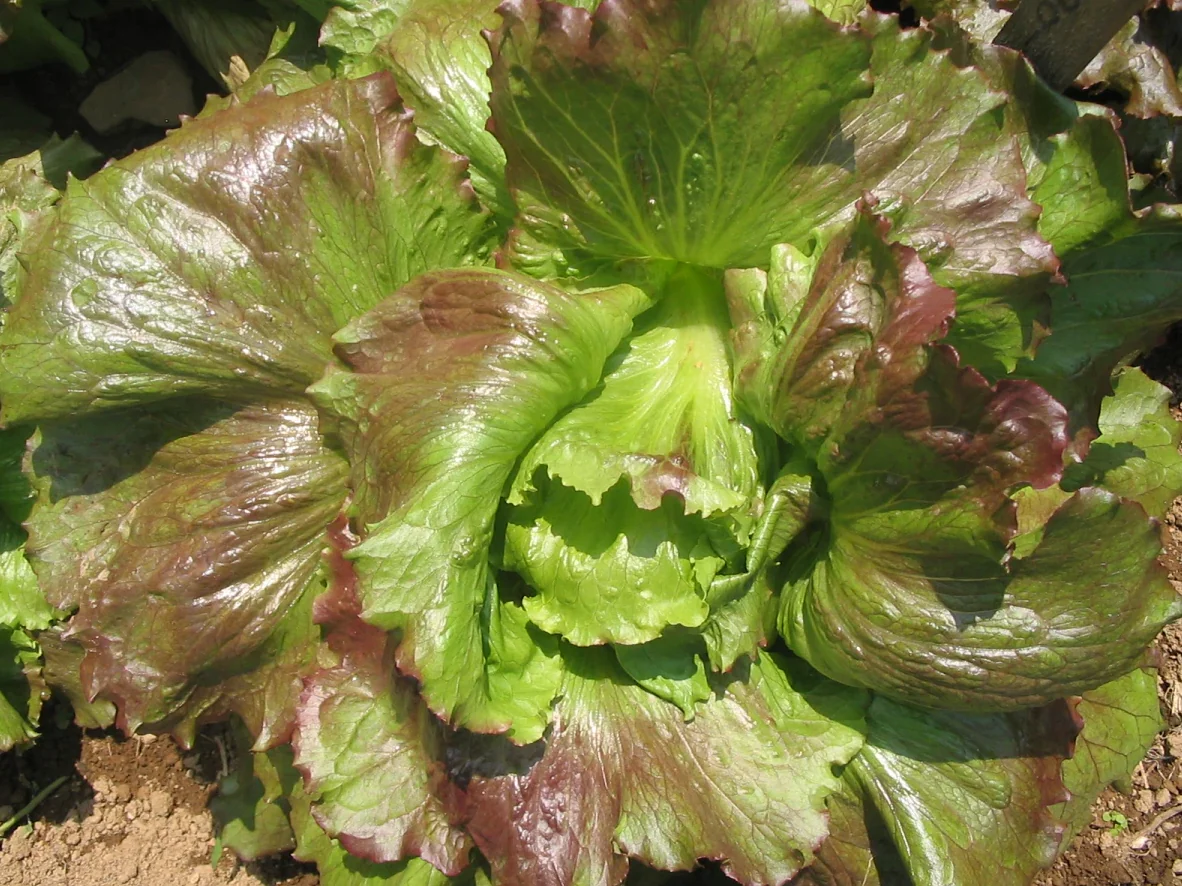
Red Iceberg is a crisphead lettuce variety that combines the classic crunch of iceberg with a striking red-bronze outer leaf coloration. Forming tight, dense heads with a refreshing texture, it offers both visual appeal and satisfying crispness. This variety is well-suited for cool-season growing and brings diversity to both garden beds and fresh harvests.
Key Characteristics
Crisp, refreshing texture with mild flavor
Red Iceberg forms dense, crunchy heads with a clean, mild taste. The interior leaves are pale green and juicy, while the outer leaves add a slightly more robust texture, making it ideal for salads, sandwiches, and wraps.
Red-bronze outer leaves for visual contrast
The outer leaves develop a rich reddish tint, especially in cooler temperatures, while the inner head remains light green. This contrast adds depth to garden plantings and harvested greens, offering more visual interest than standard iceberg types.
Cool-season crop with strong head formation
This variety performs best in cooler temperatures, forming tight heads when grown in spring or fall. It requires consistent moisture and fertile soil to develop its signature density and crispness.
Compact growth for structured garden planting
Red Iceberg grows in a tidy, compact form, making it easy to space in rows or blocks. Its uniform head development makes it suitable for organized garden beds and small-scale production systems.
- Native range: Cultivated variety (species origin Mediterranean region)
- Plant life cycle: Annual
- Sun requirements: Full sun to partial shade
- Soil requirements: Medium, fertile, well-drained
- Mature height: 8–12 inches
- Bloom time: Bolts in heat (summer)
- Bloom color: Yellow
- USDA Hardiness zones: Grown as an annual in all zones
For best results, grow in cool weather with consistent moisture to encourage full head development and prevent bitterness. Harvest when heads are firm, and consider succession planting for a continuous supply.
Product Information
Product Information
Shipping & Returns
Shipping & Returns
Description
Lettuce, Red Iceberg (Lactuca sativa ‘Red Iceberg’)
Red Iceberg is a crisphead lettuce variety that combines the classic crunch of iceberg with a striking red-bronze outer leaf coloration. Forming tight, dense heads with a refreshing texture, it offers both visual appeal and satisfying crispness. This variety is well-suited for cool-season growing and brings diversity to both garden beds and fresh harvests.
Key Characteristics
Crisp, refreshing texture with mild flavor
Red Iceberg forms dense, crunchy heads with a clean, mild taste. The interior leaves are pale green and juicy, while the outer leaves add a slightly more robust texture, making it ideal for salads, sandwiches, and wraps.
Red-bronze outer leaves for visual contrast
The outer leaves develop a rich reddish tint, especially in cooler temperatures, while the inner head remains light green. This contrast adds depth to garden plantings and harvested greens, offering more visual interest than standard iceberg types.
Cool-season crop with strong head formation
This variety performs best in cooler temperatures, forming tight heads when grown in spring or fall. It requires consistent moisture and fertile soil to develop its signature density and crispness.
Compact growth for structured garden planting
Red Iceberg grows in a tidy, compact form, making it easy to space in rows or blocks. Its uniform head development makes it suitable for organized garden beds and small-scale production systems.
- Native range: Cultivated variety (species origin Mediterranean region)
- Plant life cycle: Annual
- Sun requirements: Full sun to partial shade
- Soil requirements: Medium, fertile, well-drained
- Mature height: 8–12 inches
- Bloom time: Bolts in heat (summer)
- Bloom color: Yellow
- USDA Hardiness zones: Grown as an annual in all zones
For best results, grow in cool weather with consistent moisture to encourage full head development and prevent bitterness. Harvest when heads are firm, and consider succession planting for a continuous supply.