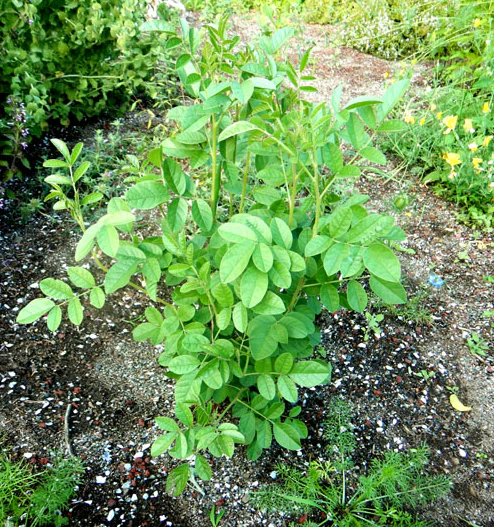
Licorice, Official
Licorice, Official (Glycyrrhiza glabra)
Licorice is a well-known medicinal perennial valued for its sweet, fibrous roots and long history of use across European, Middle Eastern, and Asian herbal traditions. The roots contain glycyrrhizin, a compound many times sweeter than sugar, and are widely used in teas, extracts, and herbal formulas. Beyond its medicinal role, licorice is also a nitrogen-fixing legume that contributes to soil health in regenerative systems.
Key Characteristics
Sweet medicinal root with long traditional use
The roots are the primary harvested part, used fresh or dried for teas, decoctions, and extracts. Licorice root is known for its naturally sweet flavor and is commonly used to harmonize herbal formulas. It has been used traditionally to soothe the throat, support digestion, and moderate the effects of stronger herbs.
Respiratory and digestive support herb
Licorice root is widely used as an expectorant and demulcent, helping to soothe irritated mucous membranes in the throat and lungs. It is also used to support digestion, particularly for stomach irritation and ulcers. In many traditions, it plays a balancing role in multi-herb formulations.
Nitrogen-fixing perennial for soil-building systems
As a legume, licorice forms symbiotic relationships with soil bacteria to fix nitrogen, improving soil fertility over time. This makes it a valuable addition to permaculture systems, especially in areas where soil building and long-term productivity are priorities.
Deep-rooted plant suited to long-term cultivation
Licorice develops extensive root systems that require loose, deep soil for proper growth. It prefers warm climates and a long growing season, and roots are typically harvested after 2–3 years for maximum size and potency. Its upright growth also allows it to integrate into herb beds and larger perennial systems.
- Native range: Southern Europe, Middle East, Central Asia
- Plant life cycle: Perennial
- Sun requirements: Full sun
- Soil requirements: Medium, well-drained, deep and loose
- Mature height: 3–5 feet
- Bloom time: June – August
- Bloom color: Pale blue to violet
- USDA Hardiness zones: 7–10
For best results, plant in deep, fertile soil with plenty of room for root development. Allow plants to establish for multiple years before harvesting roots, and consider integrating into medicinal herb gardens or soil-building systems for long-term value.
Original: $9.95
-65%$9.95
$3.48Product Information
Product Information
Shipping & Returns
Shipping & Returns
Description
Licorice, Official (Glycyrrhiza glabra)
Licorice is a well-known medicinal perennial valued for its sweet, fibrous roots and long history of use across European, Middle Eastern, and Asian herbal traditions. The roots contain glycyrrhizin, a compound many times sweeter than sugar, and are widely used in teas, extracts, and herbal formulas. Beyond its medicinal role, licorice is also a nitrogen-fixing legume that contributes to soil health in regenerative systems.
Key Characteristics
Sweet medicinal root with long traditional use
The roots are the primary harvested part, used fresh or dried for teas, decoctions, and extracts. Licorice root is known for its naturally sweet flavor and is commonly used to harmonize herbal formulas. It has been used traditionally to soothe the throat, support digestion, and moderate the effects of stronger herbs.
Respiratory and digestive support herb
Licorice root is widely used as an expectorant and demulcent, helping to soothe irritated mucous membranes in the throat and lungs. It is also used to support digestion, particularly for stomach irritation and ulcers. In many traditions, it plays a balancing role in multi-herb formulations.
Nitrogen-fixing perennial for soil-building systems
As a legume, licorice forms symbiotic relationships with soil bacteria to fix nitrogen, improving soil fertility over time. This makes it a valuable addition to permaculture systems, especially in areas where soil building and long-term productivity are priorities.
Deep-rooted plant suited to long-term cultivation
Licorice develops extensive root systems that require loose, deep soil for proper growth. It prefers warm climates and a long growing season, and roots are typically harvested after 2–3 years for maximum size and potency. Its upright growth also allows it to integrate into herb beds and larger perennial systems.
- Native range: Southern Europe, Middle East, Central Asia
- Plant life cycle: Perennial
- Sun requirements: Full sun
- Soil requirements: Medium, well-drained, deep and loose
- Mature height: 3–5 feet
- Bloom time: June – August
- Bloom color: Pale blue to violet
- USDA Hardiness zones: 7–10
For best results, plant in deep, fertile soil with plenty of room for root development. Allow plants to establish for multiple years before harvesting roots, and consider integrating into medicinal herb gardens or soil-building systems for long-term value.