Peredovik Sunflower Seeds
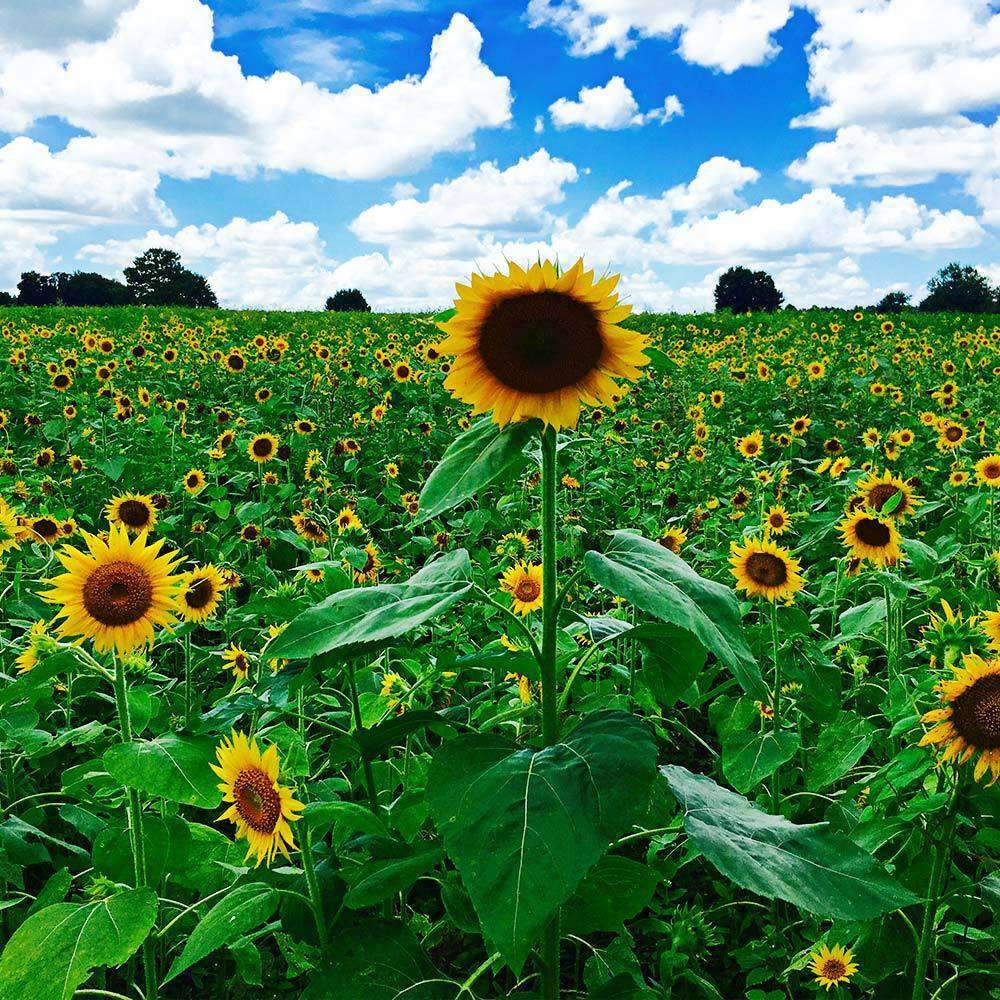
Peredovik sunflowers are a fast-growing, black-oil sunflower variety prized for attracting wildlife, feeding pollinators, and improving soil health. These tall annuals produce large blooms packed with oily seeds that draw in birds-especially doves, quail, and songbirds-while also serving as a sacrificial or decoy crop to reduce deer pressure on nearby plantings.
Their deep roots help loosen soil, and their bold flowers support bees and other beneficial insects. Great for wildlife plots, cover crop mixes, or adding biodiversity to garden edges and food forests.
Sunflowers are powerful tools in bioremediation, the process of using plants to clean up contaminated soils. Their deep roots and fast growth make them effective at phytoextraction, where they draw up heavy metals like lead, arsenic, cadmium, and zinc from the soil into their tissues. This helps reduce soil toxicity in polluted urban lots, former industrial sites, and areas impacted by mining or chemical use. Sunflowers are especially valued in regenerative land restoration projects for their ability to stabilize soil, support pollinators, and improve the land's long-term ecological function-all while helping remove harmful substances naturally.
Best use: Wildlife habitat, pollinator support, decoy crop
Sow: Late spring after danger of frost
Height: 4-6 ft
Growth window: 70-100 days to maturity
Seeding rate: ~1 lb per 500-1000 sq ft
Original: $6.95
-65%$6.95
$2.43Product Information
Product Information
Shipping & Returns
Shipping & Returns
Description
Peredovik sunflowers are a fast-growing, black-oil sunflower variety prized for attracting wildlife, feeding pollinators, and improving soil health. These tall annuals produce large blooms packed with oily seeds that draw in birds-especially doves, quail, and songbirds-while also serving as a sacrificial or decoy crop to reduce deer pressure on nearby plantings.
Their deep roots help loosen soil, and their bold flowers support bees and other beneficial insects. Great for wildlife plots, cover crop mixes, or adding biodiversity to garden edges and food forests.
Sunflowers are powerful tools in bioremediation, the process of using plants to clean up contaminated soils. Their deep roots and fast growth make them effective at phytoextraction, where they draw up heavy metals like lead, arsenic, cadmium, and zinc from the soil into their tissues. This helps reduce soil toxicity in polluted urban lots, former industrial sites, and areas impacted by mining or chemical use. Sunflowers are especially valued in regenerative land restoration projects for their ability to stabilize soil, support pollinators, and improve the land's long-term ecological function-all while helping remove harmful substances naturally.
Best use: Wildlife habitat, pollinator support, decoy crop
Sow: Late spring after danger of frost
Height: 4-6 ft
Growth window: 70-100 days to maturity
Seeding rate: ~1 lb per 500-1000 sq ft