Reciprocity Is... by Hadasah Morelove
Reciprocity Is… (Hadasah Morelove)
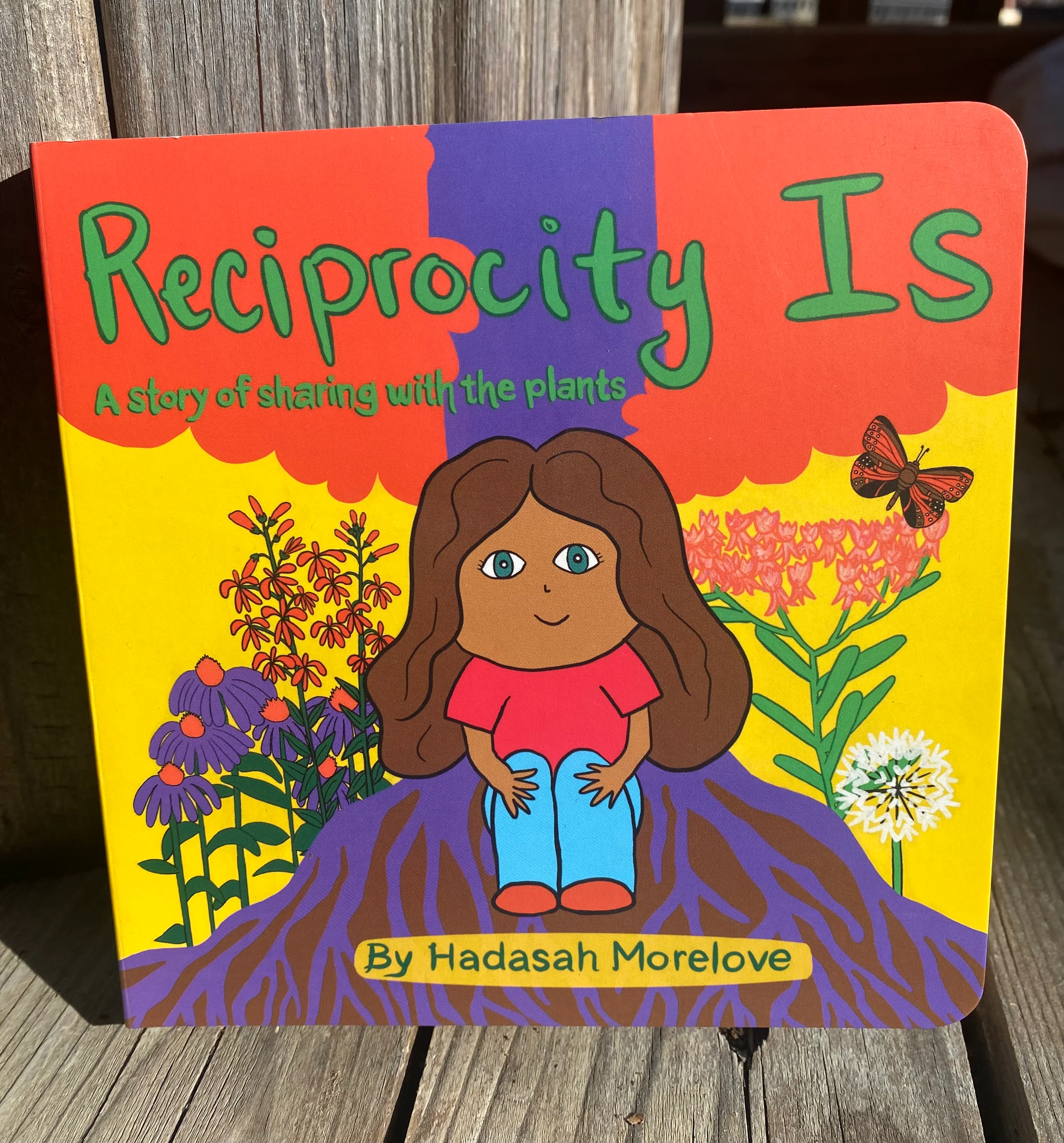
Reciprocity Is… is a thoughtful, visually engaging children’s book that introduces the concept of mutual care and interconnectedness in the natural world. Through simple language and expressive illustrations, Hadasah Morelove explores how plants, animals, and people give and receive in relationship—offering a meaningful framework for understanding balance, gratitude, and responsibility within ecosystems.
Key Characteristics
-
Introduces Ecological Relationships Through Story
The book illustrates how living systems are built on exchange—plants offering nectar to pollinators, animals dispersing seeds, and humans participating in cycles of care. These examples help children grasp the idea of reciprocity in a tangible way. -
Builds Awareness of Give-and-Take in Nature
Rather than presenting nature as one-directional, it emphasizes mutual relationships. This helps young readers understand that every action—whether in a garden or daily life—can contribute to or take from a larger system. -
Accessible Language with Meaningful Depth
Written simply enough for young audiences, while still carrying concepts that resonate with older readers. It opens the door to deeper conversations about stewardship, respect, and living in balance. -
Expressive, Nature-Centered Illustrations
The artwork reinforces the message by depicting connections between plants, animals, and people. Visual storytelling helps make abstract ideas more concrete and memorable.
Product Details
- Format: Paperback / Hardcover
- Subject: Children’s book, ecology, relationships in nature
- Recommended Use: Read-aloud, nature education, values-based learning
- Skill Level: Beginner / Children
- Language: English
- Illustrations: Full-color, nature-inspired artwork
Growing & Use Notes
This book pairs well with time spent in the garden or outdoors observing relationships—watching pollinators, planting for wildlife, or tending soil. It’s especially useful as a conversation starter around how we interact with the land and what it means to give back.
Original: $15.95
-65%$15.95
$5.58Product Information
Product Information
Shipping & Returns
Shipping & Returns
Description
Reciprocity Is… (Hadasah Morelove)
Reciprocity Is… is a thoughtful, visually engaging children’s book that introduces the concept of mutual care and interconnectedness in the natural world. Through simple language and expressive illustrations, Hadasah Morelove explores how plants, animals, and people give and receive in relationship—offering a meaningful framework for understanding balance, gratitude, and responsibility within ecosystems.
Key Characteristics
-
Introduces Ecological Relationships Through Story
The book illustrates how living systems are built on exchange—plants offering nectar to pollinators, animals dispersing seeds, and humans participating in cycles of care. These examples help children grasp the idea of reciprocity in a tangible way. -
Builds Awareness of Give-and-Take in Nature
Rather than presenting nature as one-directional, it emphasizes mutual relationships. This helps young readers understand that every action—whether in a garden or daily life—can contribute to or take from a larger system. -
Accessible Language with Meaningful Depth
Written simply enough for young audiences, while still carrying concepts that resonate with older readers. It opens the door to deeper conversations about stewardship, respect, and living in balance. -
Expressive, Nature-Centered Illustrations
The artwork reinforces the message by depicting connections between plants, animals, and people. Visual storytelling helps make abstract ideas more concrete and memorable.
Product Details
- Format: Paperback / Hardcover
- Subject: Children’s book, ecology, relationships in nature
- Recommended Use: Read-aloud, nature education, values-based learning
- Skill Level: Beginner / Children
- Language: English
- Illustrations: Full-color, nature-inspired artwork
Growing & Use Notes
This book pairs well with time spent in the garden or outdoors observing relationships—watching pollinators, planting for wildlife, or tending soil. It’s especially useful as a conversation starter around how we interact with the land and what it means to give back.