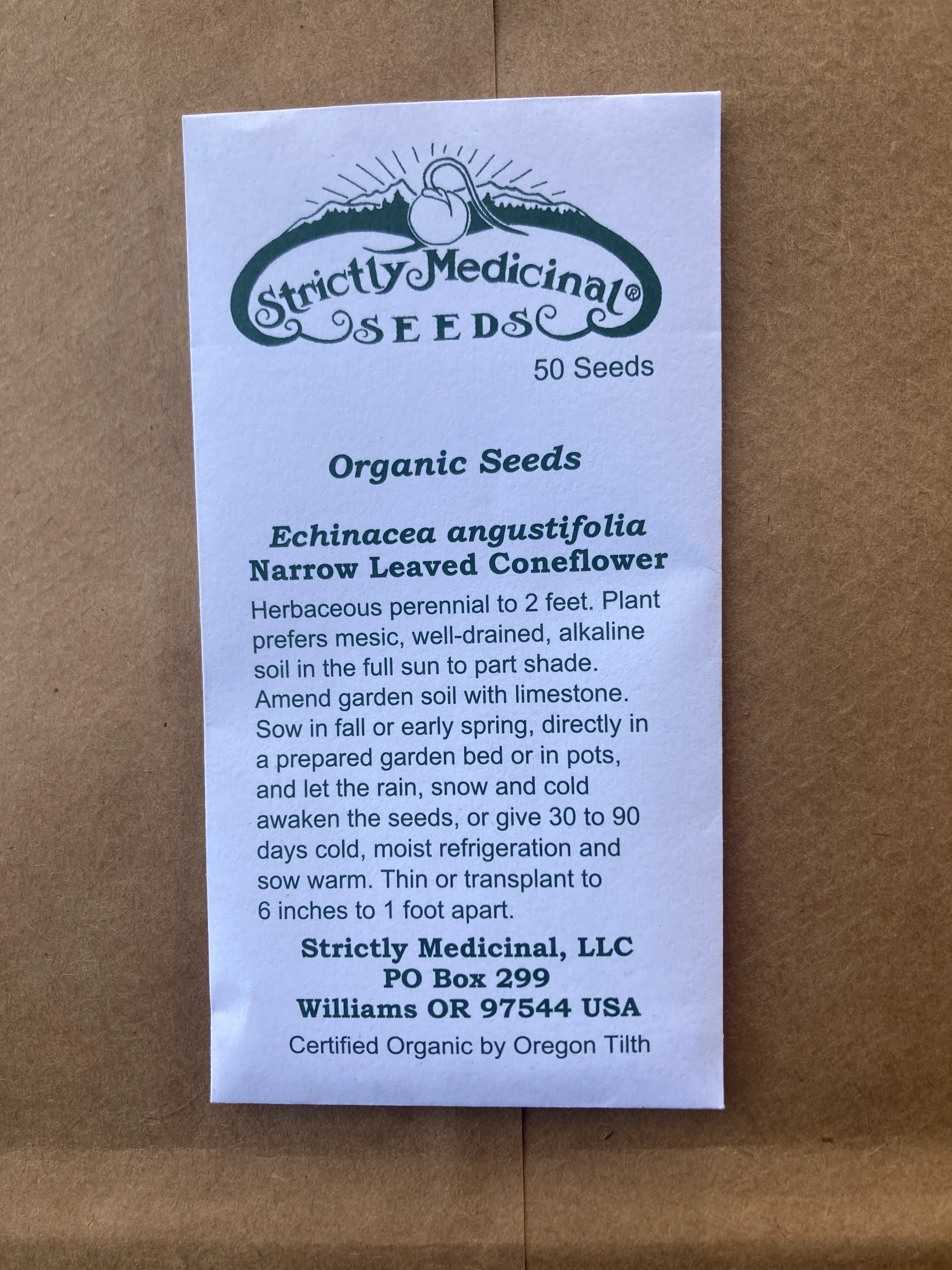
Seeds Echinacea Angustifolia
Echinacea, Angustifolia
(Echinacea angustifolia)
Echinacea angustifolia is a hardy native prairie perennial known for its narrow leaves, rosy-purple petals, and powerful traditional medicinal use. Often considered one of the most potent echinacea species in Western herbalism, its deep taproot and drought tolerance make it especially well suited to dry meadows and prairie-style plantings. A long-lived, resilient species for both medicinal and ecological landscapes.
Key Characteristics
-
Traditional Immune Support Herb
The root is the primary medicinal part and has been traditionally used in tinctures and teas to support immune response. Indigenous peoples and later herbalists valued this species for seasonal wellness and immune resilience. -
Deep Taproot & Prairie Adaptation
Develops a strong taproot that allows it to thrive in dry, well-drained soils. Particularly well adapted to prairie environments and low-input landscapes. -
Native Pollinator Plant
Rosy-purple blooms attract native bees, including long-tongued bumble bees (Bombus spp.), as well as butterflies. Seed heads later provide food for birds such as goldfinches. -
Long-Lived Meadow Perennial
Grows 1–2.5 feet tall and integrates well into prairie restorations, pollinator meadows, and dry perennial borders. Its compact stature makes it suitable for mass plantings and layered meadow designs.
Product Details
- Botanical Name: Echinacea angustifolia
- Native Range: Central North American prairies
- Plant Life Cycle: Perennial
- Sun Requirements: Full sun
- Soil Requirements: Medium-dry to dry, well-drained
- Mature Height: 1–2.5 feet
- Bloom Time: June–August
- Bloom Color: Rosy purple
- USDA Hardiness Zones: 3–8
Cold stratification improves germination—sow outdoors in fall or refrigerate seeds for 30 days before spring planting. Avoid overly rich soils, which can reduce root strength and longevity. Harvest roots after 3–4 years for medicinal use. In permaculture systems, plant in sunny meadow strips or the herbaceous layer of dry food forest edges where deep roots improve soil structure.
Echinacea angustifolia combines prairie resilience, pollinator value, and respected medicinal tradition—an essential native perennial for dry landscapes.
Original: $4.95
-65%$4.95
$1.73Product Information
Product Information
Shipping & Returns
Shipping & Returns
Description
Echinacea, Angustifolia
(Echinacea angustifolia)
Echinacea angustifolia is a hardy native prairie perennial known for its narrow leaves, rosy-purple petals, and powerful traditional medicinal use. Often considered one of the most potent echinacea species in Western herbalism, its deep taproot and drought tolerance make it especially well suited to dry meadows and prairie-style plantings. A long-lived, resilient species for both medicinal and ecological landscapes.
Key Characteristics
-
Traditional Immune Support Herb
The root is the primary medicinal part and has been traditionally used in tinctures and teas to support immune response. Indigenous peoples and later herbalists valued this species for seasonal wellness and immune resilience. -
Deep Taproot & Prairie Adaptation
Develops a strong taproot that allows it to thrive in dry, well-drained soils. Particularly well adapted to prairie environments and low-input landscapes. -
Native Pollinator Plant
Rosy-purple blooms attract native bees, including long-tongued bumble bees (Bombus spp.), as well as butterflies. Seed heads later provide food for birds such as goldfinches. -
Long-Lived Meadow Perennial
Grows 1–2.5 feet tall and integrates well into prairie restorations, pollinator meadows, and dry perennial borders. Its compact stature makes it suitable for mass plantings and layered meadow designs.
Product Details
- Botanical Name: Echinacea angustifolia
- Native Range: Central North American prairies
- Plant Life Cycle: Perennial
- Sun Requirements: Full sun
- Soil Requirements: Medium-dry to dry, well-drained
- Mature Height: 1–2.5 feet
- Bloom Time: June–August
- Bloom Color: Rosy purple
- USDA Hardiness Zones: 3–8
Cold stratification improves germination—sow outdoors in fall or refrigerate seeds for 30 days before spring planting. Avoid overly rich soils, which can reduce root strength and longevity. Harvest roots after 3–4 years for medicinal use. In permaculture systems, plant in sunny meadow strips or the herbaceous layer of dry food forest edges where deep roots improve soil structure.
Echinacea angustifolia combines prairie resilience, pollinator value, and respected medicinal tradition—an essential native perennial for dry landscapes.