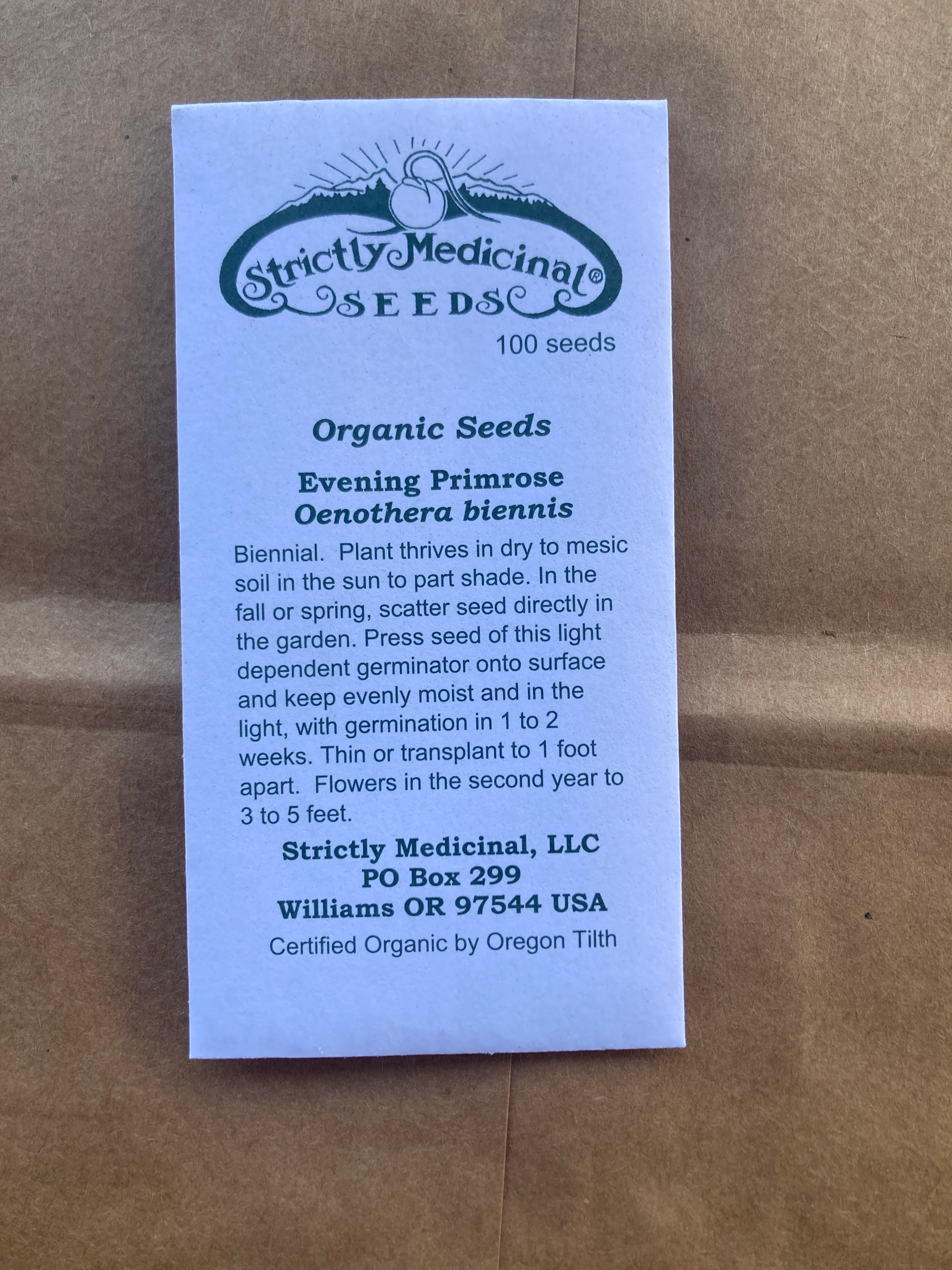
Seeds Evening Primrose
Evening Primrose
(Oenothera biennis)
Evening Primrose is a native biennial wildflower known for its bright yellow blooms that open at dusk and glow into the evening. A valuable pollinator plant and traditional medicinal herb, it thrives in open meadows, field edges, and well-drained soils. Its seeds are also known as a source of gamma-linolenic acid (GLA), making it a plant of both ecological and herbal interest.
Key Characteristics
-
Night-Blooming Pollinator Plant
Lemon-yellow flowers open in the evening and attract night-flying moths, including sphinx moths. Daytime visitors include bees and other beneficial insects. The plant provides nectar during mid-to-late summer when many early bloomers have finished. -
Traditional Herbal & Oil Seed Plant
The seeds are pressed for evening primrose oil, traditionally valued for skin and women’s health support. Roots were historically used as a mild food source and herbal preparation. Leaves and roots have also been used in traditional remedies. -
Hardy Native for Poor Soils
Tolerates sandy, gravelly, and disturbed soils. Forms a basal rosette in its first year and sends up a tall flowering stalk in its second season. -
Self-Seeding Meadow Species
Readily reseeds in suitable open ground. Ideal for naturalized plantings, prairie strips, and pollinator meadows where gentle succession is welcome.
Product Details
- Botanical Name: Oenothera biennis
- Native Range: Eastern & Central North America
- Plant Life Cycle: Biennial
- Sun Requirements: Full sun
- Soil Requirements: Medium-dry to medium, well-drained
- Mature Height: 3–5 feet (second-year flowering stalk)
- Bloom Time: June–September (second year)
- Bloom Color: Bright yellow
- USDA Hardiness Zones: 4–9
Surface sow in fall or early spring; light aids germination. Choose a well-drained site with moderate fertility. Allow some plants to go to seed to encourage natural regeneration. In permaculture systems, integrate into meadow plantings, sunny orchard edges, or pollinator strips where its height and late bloom provide seasonal diversity.
Evening Primrose offers nighttime bloom, native resilience, and herbal tradition—an adaptable biennial for ecological and medicinal gardens.
Original: $4.95
-65%$4.95
$1.73Product Information
Product Information
Shipping & Returns
Shipping & Returns
Description
Evening Primrose
(Oenothera biennis)
Evening Primrose is a native biennial wildflower known for its bright yellow blooms that open at dusk and glow into the evening. A valuable pollinator plant and traditional medicinal herb, it thrives in open meadows, field edges, and well-drained soils. Its seeds are also known as a source of gamma-linolenic acid (GLA), making it a plant of both ecological and herbal interest.
Key Characteristics
-
Night-Blooming Pollinator Plant
Lemon-yellow flowers open in the evening and attract night-flying moths, including sphinx moths. Daytime visitors include bees and other beneficial insects. The plant provides nectar during mid-to-late summer when many early bloomers have finished. -
Traditional Herbal & Oil Seed Plant
The seeds are pressed for evening primrose oil, traditionally valued for skin and women’s health support. Roots were historically used as a mild food source and herbal preparation. Leaves and roots have also been used in traditional remedies. -
Hardy Native for Poor Soils
Tolerates sandy, gravelly, and disturbed soils. Forms a basal rosette in its first year and sends up a tall flowering stalk in its second season. -
Self-Seeding Meadow Species
Readily reseeds in suitable open ground. Ideal for naturalized plantings, prairie strips, and pollinator meadows where gentle succession is welcome.
Product Details
- Botanical Name: Oenothera biennis
- Native Range: Eastern & Central North America
- Plant Life Cycle: Biennial
- Sun Requirements: Full sun
- Soil Requirements: Medium-dry to medium, well-drained
- Mature Height: 3–5 feet (second-year flowering stalk)
- Bloom Time: June–September (second year)
- Bloom Color: Bright yellow
- USDA Hardiness Zones: 4–9
Surface sow in fall or early spring; light aids germination. Choose a well-drained site with moderate fertility. Allow some plants to go to seed to encourage natural regeneration. In permaculture systems, integrate into meadow plantings, sunny orchard edges, or pollinator strips where its height and late bloom provide seasonal diversity.
Evening Primrose offers nighttime bloom, native resilience, and herbal tradition—an adaptable biennial for ecological and medicinal gardens.