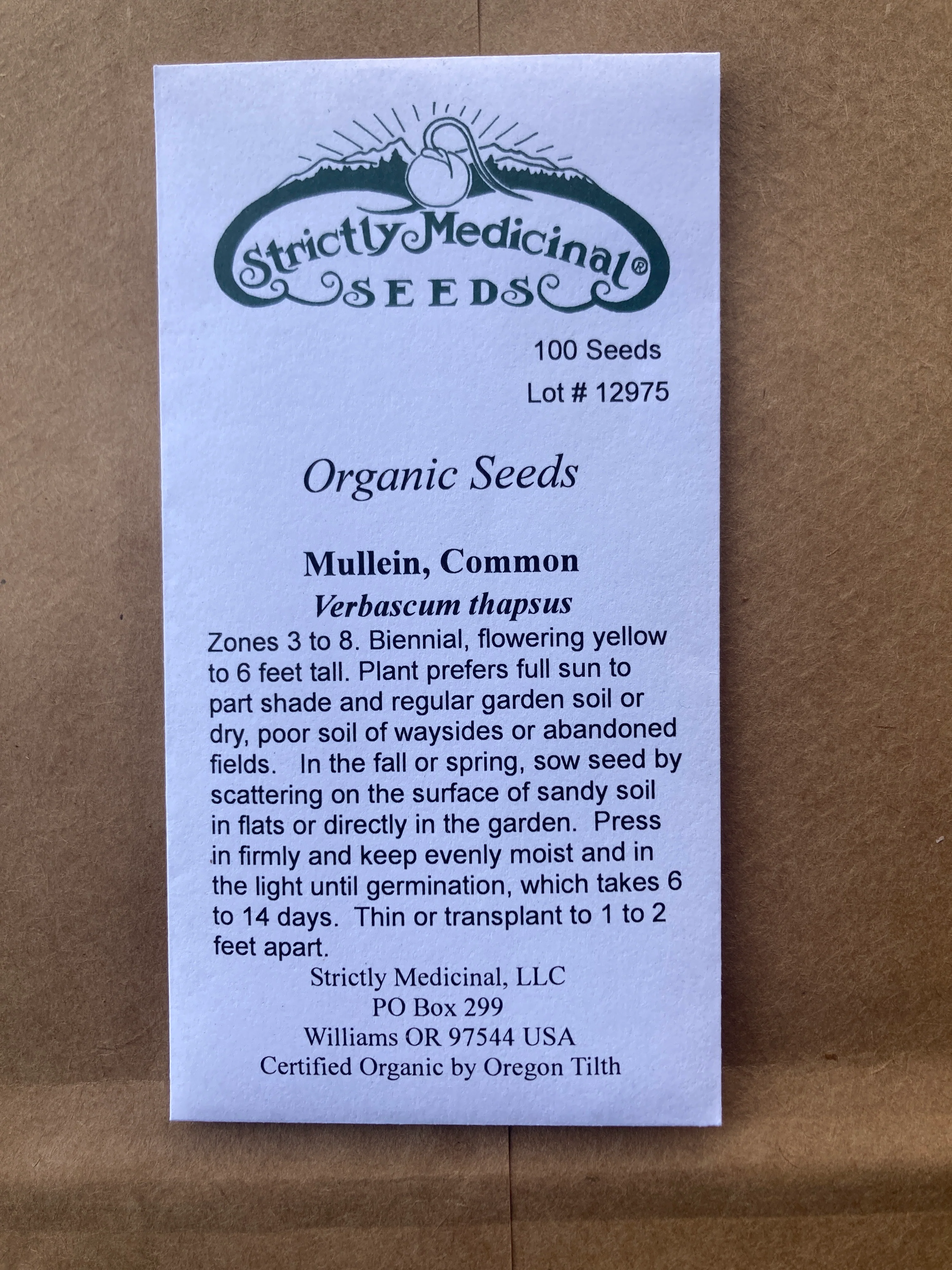
Seeds Mullein, Common
Mullein, Common
(Verbascum thapsus)
Common Mullein is a biennial medicinal herb known for its tall golden flower spikes and soft, velvety leaves. In its first year, it forms a low rosette of fuzzy gray-green leaves; in the second year, it sends up a dramatic flowering stalk that can tower above surrounding plants. Long valued in traditional herbalism for respiratory support, mullein is also a resilient species for poor, dry soils.
Key Characteristics
-
Traditional Respiratory Herb
The leaves and flowers are the primary medicinal parts. Traditionally prepared as teas, infused oils, or tinctures, mullein has been used to support lung health, soothe coughs, and ease throat irritation. Leaves are typically dried before use. -
Striking Second-Year Flower Spike
In its flowering year, mullein produces a tall central stalk lined with bright yellow blooms that open sequentially. The blooms attract bees and other small pollinators throughout summer. -
Thrives in Poor, Dry Soils
Mullein establishes easily in disturbed ground, gravelly soil, and dry slopes. Its deep taproot helps it access moisture and stabilize loose soils. -
Self-Seeding & Naturalizing
Once established, mullein will often reseed in suitable open areas. Allowing some plants to go to seed supports natural regeneration in meadow-style or wild herb plantings.
Product Details
- Botanical Name: Verbascum thapsus
- Native Range: Europe, Asia & North Africa (widely naturalized in North America)
- Plant Life Cycle: Biennial
- Sun Requirements: Full sun
- Soil Requirements: Medium-dry to dry, well-drained
- Mature Height: 3–6 feet (flowering stalk, second year)
- Bloom Time: June–September (second year)
- Bloom Color: Bright yellow
- USDA Hardiness Zones: 3–9
Surface sow seeds in spring or fall—light aids germination. Do not bury deeply. Choose a well-drained site, as mullein dislikes wet soils. Harvest leaves during the first year or early in the second year before flowering; collect flowers as they open. In permaculture systems, mullein can be integrated into dry meadow plantings or placed on sunny edges where its vertical structure adds diversity.
Common Mullein offers rugged resilience, pollinator support, and long-standing herbal tradition—an adaptable addition to medicinal and naturalized landscapes.
Original: $4.95
-65%$4.95
$1.73Product Information
Product Information
Shipping & Returns
Shipping & Returns
Description
Mullein, Common
(Verbascum thapsus)
Common Mullein is a biennial medicinal herb known for its tall golden flower spikes and soft, velvety leaves. In its first year, it forms a low rosette of fuzzy gray-green leaves; in the second year, it sends up a dramatic flowering stalk that can tower above surrounding plants. Long valued in traditional herbalism for respiratory support, mullein is also a resilient species for poor, dry soils.
Key Characteristics
-
Traditional Respiratory Herb
The leaves and flowers are the primary medicinal parts. Traditionally prepared as teas, infused oils, or tinctures, mullein has been used to support lung health, soothe coughs, and ease throat irritation. Leaves are typically dried before use. -
Striking Second-Year Flower Spike
In its flowering year, mullein produces a tall central stalk lined with bright yellow blooms that open sequentially. The blooms attract bees and other small pollinators throughout summer. -
Thrives in Poor, Dry Soils
Mullein establishes easily in disturbed ground, gravelly soil, and dry slopes. Its deep taproot helps it access moisture and stabilize loose soils. -
Self-Seeding & Naturalizing
Once established, mullein will often reseed in suitable open areas. Allowing some plants to go to seed supports natural regeneration in meadow-style or wild herb plantings.
Product Details
- Botanical Name: Verbascum thapsus
- Native Range: Europe, Asia & North Africa (widely naturalized in North America)
- Plant Life Cycle: Biennial
- Sun Requirements: Full sun
- Soil Requirements: Medium-dry to dry, well-drained
- Mature Height: 3–6 feet (flowering stalk, second year)
- Bloom Time: June–September (second year)
- Bloom Color: Bright yellow
- USDA Hardiness Zones: 3–9
Surface sow seeds in spring or fall—light aids germination. Do not bury deeply. Choose a well-drained site, as mullein dislikes wet soils. Harvest leaves during the first year or early in the second year before flowering; collect flowers as they open. In permaculture systems, mullein can be integrated into dry meadow plantings or placed on sunny edges where its vertical structure adds diversity.
Common Mullein offers rugged resilience, pollinator support, and long-standing herbal tradition—an adaptable addition to medicinal and naturalized landscapes.