Seeds, Mustard, Cherokee Blue
Mustard, Cherokee Blue
(Brassica juncea)
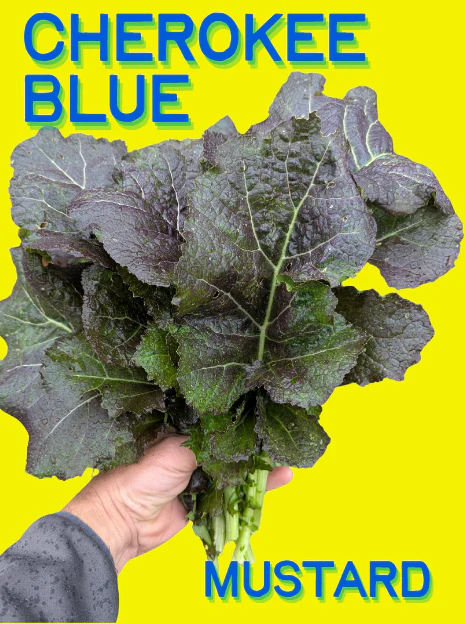
Cherokee Blue Mustard is a striking heirloom green with deep purple-blue leaves and a bold, spicy flavor. Traditionally grown for fresh greens and cooked dishes, this variety offers both beauty and resilience in cool-season gardens. Fast-growing and nutrient-dense, it’s an excellent addition to homestead food production, especially for spring and fall harvests.
Key Characteristics
-
Bold, Peppery Flavor
Leaves have a rich mustard heat that mellows when cooked. Enjoy young leaves fresh in salads for a spicy kick, or sauté mature greens with garlic, broth, or smoked meats. The flavor intensifies in cooler weather, making it a standout fall crop. -
Cold-Tolerant & Fast Growing
Cherokee Blue thrives in cool temperatures and can tolerate light frosts, which improve leaf texture and sweetness. Quick to mature, it provides dependable early spring greens and late-season harvests when other crops are slowing down. -
Nutrient-Dense Leafy Green
Mustard greens are rich in vitamins A, C, and K, along with calcium and antioxidants. A reliable source of fresh, mineral-rich greens during shoulder seasons in the garden. -
Useful Cover & Biofumigant Crop
As a member of the brassica family, mustard can be used in rotation as a soil-building cover crop. When incorporated into the soil, it may help suppress certain soil-borne pests and pathogens, making it useful in regenerative vegetable systems.
Product Details
- Botanical Name: Brassica juncea
- Native Range: Asia (widely cultivated worldwide)
- Plant Life Cycle: Annual
- Sun Requirements: Full sun to partial shade
- Soil Requirements: Medium to medium-wet, fertile, well-drained
- Mature Height: 12–24 inches
- Bloom Time: April–May (if allowed to bolt)
- Bloom Color: Bright yellow
- Days to Maturity: 30–45 days (baby greens), 45–55 days (full size)
- USDA Hardiness Zones: Grown as an annual in zones 3–10
Direct sow in early spring as soon as soil can be worked, or in late summer for fall harvests. Maintain consistent moisture to prevent premature bolting. Harvest outer leaves regularly to extend production. In permaculture and intensive garden systems, use mustard as a cool-season rotation crop or quick-growing green between heavier feeders.
Cherokee Blue Mustard brings vibrant color, bold flavor, and cool-season resilience to productive gardens.
These seeds come from the Appalachian Seed Growers Collective, a regional network of farmers dedicated to growing and sharing seeds adapted to the Southern Appalachian climate and rooted in seed sovereignty and crop diversity. These varieties have been grown and saved in place by local growers to thrive in your garden while supporting resilient, locally-grown food systems.
Product Information
Product Information
Shipping & Returns
Shipping & Returns
Description
Mustard, Cherokee Blue
(Brassica juncea)
Cherokee Blue Mustard is a striking heirloom green with deep purple-blue leaves and a bold, spicy flavor. Traditionally grown for fresh greens and cooked dishes, this variety offers both beauty and resilience in cool-season gardens. Fast-growing and nutrient-dense, it’s an excellent addition to homestead food production, especially for spring and fall harvests.
Key Characteristics
-
Bold, Peppery Flavor
Leaves have a rich mustard heat that mellows when cooked. Enjoy young leaves fresh in salads for a spicy kick, or sauté mature greens with garlic, broth, or smoked meats. The flavor intensifies in cooler weather, making it a standout fall crop. -
Cold-Tolerant & Fast Growing
Cherokee Blue thrives in cool temperatures and can tolerate light frosts, which improve leaf texture and sweetness. Quick to mature, it provides dependable early spring greens and late-season harvests when other crops are slowing down. -
Nutrient-Dense Leafy Green
Mustard greens are rich in vitamins A, C, and K, along with calcium and antioxidants. A reliable source of fresh, mineral-rich greens during shoulder seasons in the garden. -
Useful Cover & Biofumigant Crop
As a member of the brassica family, mustard can be used in rotation as a soil-building cover crop. When incorporated into the soil, it may help suppress certain soil-borne pests and pathogens, making it useful in regenerative vegetable systems.
Product Details
- Botanical Name: Brassica juncea
- Native Range: Asia (widely cultivated worldwide)
- Plant Life Cycle: Annual
- Sun Requirements: Full sun to partial shade
- Soil Requirements: Medium to medium-wet, fertile, well-drained
- Mature Height: 12–24 inches
- Bloom Time: April–May (if allowed to bolt)
- Bloom Color: Bright yellow
- Days to Maturity: 30–45 days (baby greens), 45–55 days (full size)
- USDA Hardiness Zones: Grown as an annual in zones 3–10
Direct sow in early spring as soon as soil can be worked, or in late summer for fall harvests. Maintain consistent moisture to prevent premature bolting. Harvest outer leaves regularly to extend production. In permaculture and intensive garden systems, use mustard as a cool-season rotation crop or quick-growing green between heavier feeders.
Cherokee Blue Mustard brings vibrant color, bold flavor, and cool-season resilience to productive gardens.
These seeds come from the Appalachian Seed Growers Collective, a regional network of farmers dedicated to growing and sharing seeds adapted to the Southern Appalachian climate and rooted in seed sovereignty and crop diversity. These varieties have been grown and saved in place by local growers to thrive in your garden while supporting resilient, locally-grown food systems.