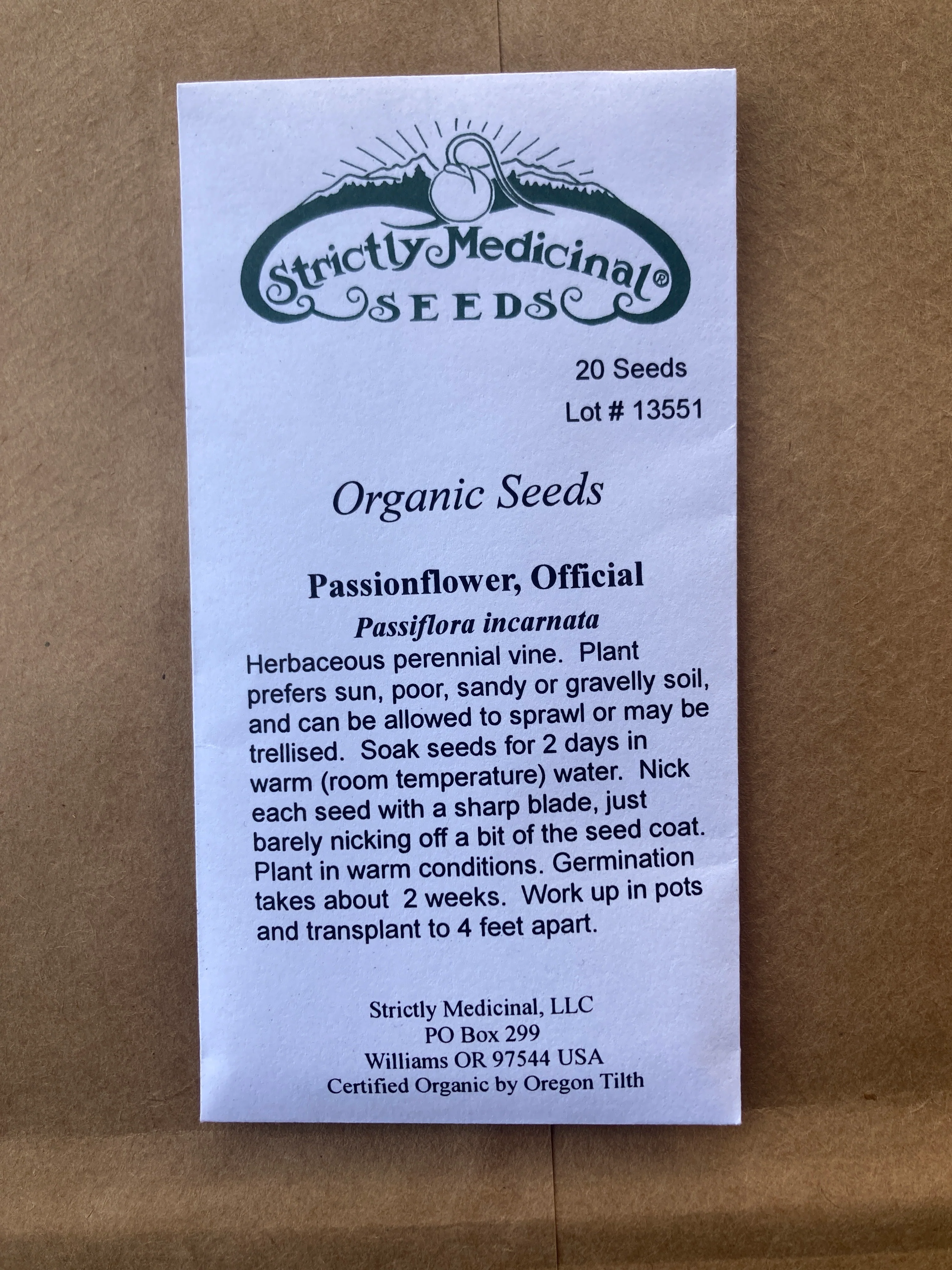
Seeds Passionflower Official
Passionflower, Official
(Passiflora incarnata)
Passionflower Official, also known as Maypop, is a fast-growing native perennial vine with intricate purple-and-white flowers and edible fruit. Revered in traditional Western herbalism for its calming properties, this striking climber also serves an important ecological role as a host plant for several butterfly species. A beautiful and functional addition to food forests, fences, and trellised garden systems.
Key Characteristics
-
Traditional Calming Nervine
The aerial parts (leaves, stems, and flowers) are harvested during bloom and used in teas and tinctures. Traditionally valued for supporting restful sleep, easing nervous tension, and promoting relaxation. -
Native Butterfly Host Plant
Passiflora incarnata is a larval host plant for Gulf Fritillary (Agraulis vanillae), Variegated Fritillary (Euptoieta claudia), and Zebra Longwing (Heliconius charithonia) butterflies. Its flowers also attract bees and other pollinators. -
Edible Maypop Fruit
Oval green fruits ripen to yellow and contain aromatic pulp with a tropical flavor. The pulp can be eaten fresh or used in juices and desserts. Fruits develop after successful pollination. -
Vigorous Climbing Vine
Grows 10–20 feet in a season, spreading by vine and underground runners. Ideal for arbors, fences, trellises, and food forest edges where vertical layering is desired.
Product Details
- Botanical Name: Passiflora incarnata
- Native Range: Southeastern United States
- Plant Life Cycle: Perennial vine
- Sun Requirements: Full sun to partial shade
- Soil Requirements: Medium to medium-dry, well-drained
- Mature Height: 10–20 feet (climbing vine)
- Bloom Time: June–September
- Bloom Color: Purple and white
- USDA Hardiness Zones: 6–10
Cold stratification improves germination—soak seeds for 24 hours and refrigerate for 30 days before planting in spring. Provide sturdy support and allow space for spreading. Cut back in late winter if needed; vines regrow from the crown. In permaculture systems, integrate passionflower into the vine layer of food forests or along sunny fences where it can provide habitat, medicine, and seasonal fruit.
Passionflower Official offers calming herbal tradition, edible fruit, and dynamic ecological value—an exceptional native vine for regenerative landscapes.
Product Information
Product Information
Shipping & Returns
Shipping & Returns
Description
Passionflower, Official
(Passiflora incarnata)
Passionflower Official, also known as Maypop, is a fast-growing native perennial vine with intricate purple-and-white flowers and edible fruit. Revered in traditional Western herbalism for its calming properties, this striking climber also serves an important ecological role as a host plant for several butterfly species. A beautiful and functional addition to food forests, fences, and trellised garden systems.
Key Characteristics
-
Traditional Calming Nervine
The aerial parts (leaves, stems, and flowers) are harvested during bloom and used in teas and tinctures. Traditionally valued for supporting restful sleep, easing nervous tension, and promoting relaxation. -
Native Butterfly Host Plant
Passiflora incarnata is a larval host plant for Gulf Fritillary (Agraulis vanillae), Variegated Fritillary (Euptoieta claudia), and Zebra Longwing (Heliconius charithonia) butterflies. Its flowers also attract bees and other pollinators. -
Edible Maypop Fruit
Oval green fruits ripen to yellow and contain aromatic pulp with a tropical flavor. The pulp can be eaten fresh or used in juices and desserts. Fruits develop after successful pollination. -
Vigorous Climbing Vine
Grows 10–20 feet in a season, spreading by vine and underground runners. Ideal for arbors, fences, trellises, and food forest edges where vertical layering is desired.
Product Details
- Botanical Name: Passiflora incarnata
- Native Range: Southeastern United States
- Plant Life Cycle: Perennial vine
- Sun Requirements: Full sun to partial shade
- Soil Requirements: Medium to medium-dry, well-drained
- Mature Height: 10–20 feet (climbing vine)
- Bloom Time: June–September
- Bloom Color: Purple and white
- USDA Hardiness Zones: 6–10
Cold stratification improves germination—soak seeds for 24 hours and refrigerate for 30 days before planting in spring. Provide sturdy support and allow space for spreading. Cut back in late winter if needed; vines regrow from the crown. In permaculture systems, integrate passionflower into the vine layer of food forests or along sunny fences where it can provide habitat, medicine, and seasonal fruit.
Passionflower Official offers calming herbal tradition, edible fruit, and dynamic ecological value—an exceptional native vine for regenerative landscapes.