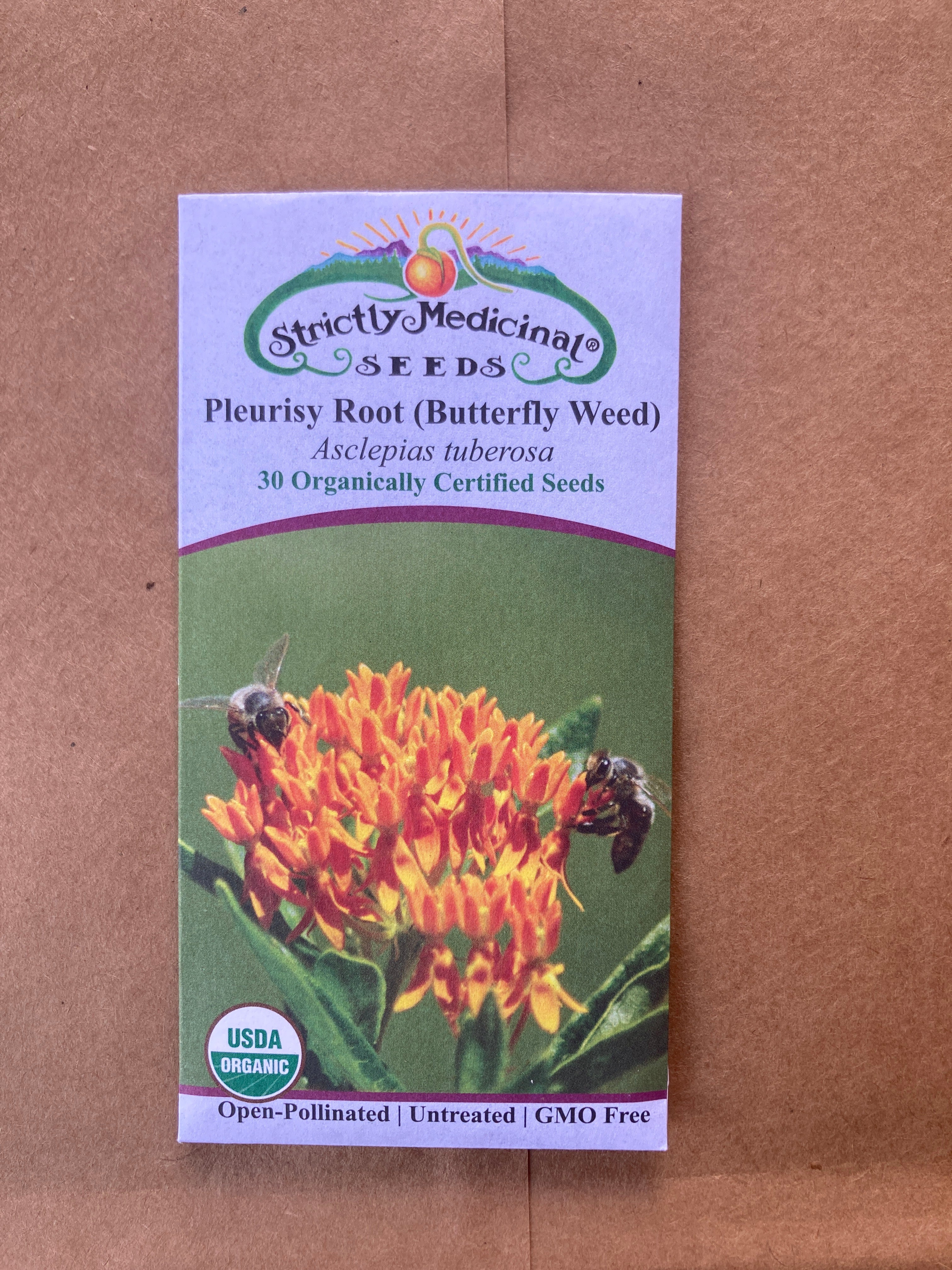
Seeds Pleurisy Root
Pleurisy Root
(Asclepias tuberosa)
Pleurisy Root, also known as Butterfly Weed, is a vibrant native perennial with brilliant orange blooms and a long history in traditional North American herbalism. Unlike many milkweeds, it prefers well-drained soils and thrives in sunny meadows and prairies. This species plays a specific ecological role as both a monarch host plant and a nectar source for a wide range of pollinators.
Key Characteristics
-
Monarch Host Plant & Pollinator Magnet
Asclepias tuberosa serves as a larval host plant for Monarch butterflies (Danaus plexippus). The nectar-rich flowers attract native bees, swallowtails, fritillaries, and other butterflies. Its mid-summer bloom helps bridge seasonal nectar gaps in meadow plantings. -
Deep Taproot for Drought Resilience
Forms a strong, deep taproot that allows it to tolerate dry, sandy, or rocky soils once established. This makes it well suited to prairie restorations, xeriscapes, and well-drained slopes. -
Traditional Respiratory Herb
Historically, the root was used in small, carefully prepared doses by Indigenous peoples and later herbalists to support respiratory health, particularly for pleurisy and lung congestion. (Note: Medicinal use should be undertaken only with proper herbal knowledge.) -
Brilliant Meadow Accent
Grows 1–2.5 feet tall with clusters of vivid orange flowers. Works well in mass plantings, native pollinator gardens, prairie strips, and sunny borders where bold summer color is desired.
Product Details
- Botanical Name: Asclepias tuberosa
- Native Range: Eastern & Central North America
- Plant Life Cycle: Perennial
- Sun Requirements: Full sun
- Soil Requirements: Medium-dry to dry, well-drained
- Mature Height: 12–30 inches
- Bloom Time: June–August
- Bloom Color: Bright orange
- USDA Hardiness Zones: 3–9
Cold stratification improves germination—sow outdoors in fall or refrigerate seeds for 30 days before spring planting. Avoid disturbing established plants due to their deep taproot. Ideal for dry meadows, prairie plantings, and sunny slopes. In permaculture systems, integrate into the herbaceous layer of pollinator-focused food forests or native habitat corridors.
Pleurisy Root offers bold color, monarch habitat, and deep-rooted resilience—an essential species for sunny native plantings.
Product Information
Product Information
Shipping & Returns
Shipping & Returns
Description
Pleurisy Root
(Asclepias tuberosa)
Pleurisy Root, also known as Butterfly Weed, is a vibrant native perennial with brilliant orange blooms and a long history in traditional North American herbalism. Unlike many milkweeds, it prefers well-drained soils and thrives in sunny meadows and prairies. This species plays a specific ecological role as both a monarch host plant and a nectar source for a wide range of pollinators.
Key Characteristics
-
Monarch Host Plant & Pollinator Magnet
Asclepias tuberosa serves as a larval host plant for Monarch butterflies (Danaus plexippus). The nectar-rich flowers attract native bees, swallowtails, fritillaries, and other butterflies. Its mid-summer bloom helps bridge seasonal nectar gaps in meadow plantings. -
Deep Taproot for Drought Resilience
Forms a strong, deep taproot that allows it to tolerate dry, sandy, or rocky soils once established. This makes it well suited to prairie restorations, xeriscapes, and well-drained slopes. -
Traditional Respiratory Herb
Historically, the root was used in small, carefully prepared doses by Indigenous peoples and later herbalists to support respiratory health, particularly for pleurisy and lung congestion. (Note: Medicinal use should be undertaken only with proper herbal knowledge.) -
Brilliant Meadow Accent
Grows 1–2.5 feet tall with clusters of vivid orange flowers. Works well in mass plantings, native pollinator gardens, prairie strips, and sunny borders where bold summer color is desired.
Product Details
- Botanical Name: Asclepias tuberosa
- Native Range: Eastern & Central North America
- Plant Life Cycle: Perennial
- Sun Requirements: Full sun
- Soil Requirements: Medium-dry to dry, well-drained
- Mature Height: 12–30 inches
- Bloom Time: June–August
- Bloom Color: Bright orange
- USDA Hardiness Zones: 3–9
Cold stratification improves germination—sow outdoors in fall or refrigerate seeds for 30 days before spring planting. Avoid disturbing established plants due to their deep taproot. Ideal for dry meadows, prairie plantings, and sunny slopes. In permaculture systems, integrate into the herbaceous layer of pollinator-focused food forests or native habitat corridors.
Pleurisy Root offers bold color, monarch habitat, and deep-rooted resilience—an essential species for sunny native plantings.