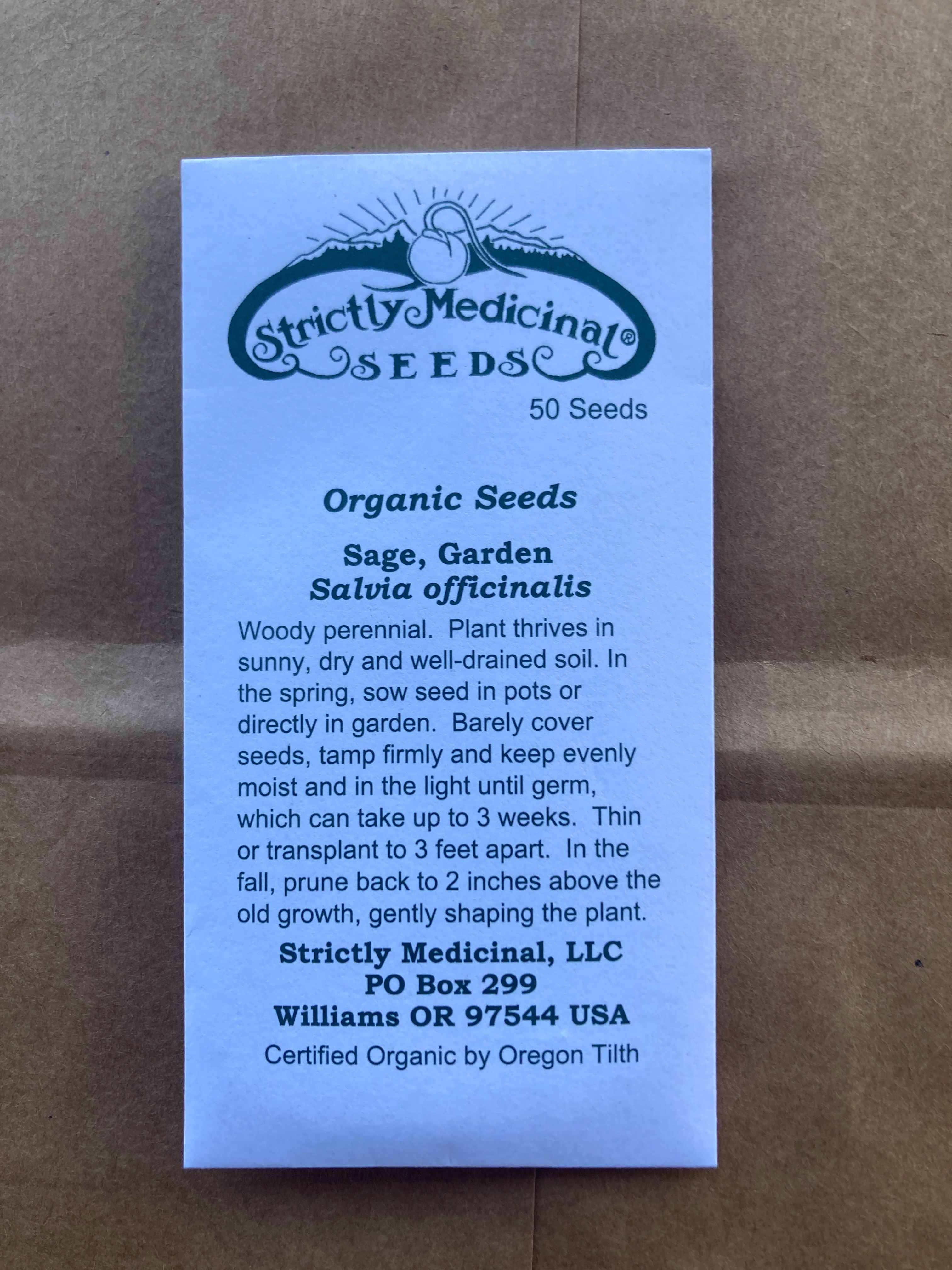
Seeds Sage, Garden
Sage, Garden
(Salvia officinalis)
Garden Sage is a classic perennial culinary and medicinal herb with soft gray-green leaves and a warm, resinous aroma. Long valued in European kitchens and herbal traditions, sage is both flavorful and functional—supporting pollinators in bloom and offering year-round harvests in mild climates. A foundational plant for herb gardens, food forests, and regenerative homesteads.
Key Characteristics
-
Essential Culinary Herb
Leaves have a savory, earthy flavor traditionally used in stuffing, roasted meats, sausages, beans, and winter dishes. Fresh or dried, sage holds its aroma well and is a staple in traditional kitchens. -
Traditional Digestive & Throat Support
The leaves have been used in teas and gargles to support digestion and soothe sore throats. Sage is known in Western herbalism for its warming, astringent properties. -
Pollinator-Friendly Blooms
Spikes of purple-blue flowers bloom in late spring to early summer and are highly attractive to bees. Flowering sage contributes nectar during a key seasonal window. -
Drought-Tolerant Perennial
Once established, sage tolerates dry conditions and thrives in well-drained soils. Its woody base and evergreen foliage (in mild climates) make it a reliable structure in the herbaceous layer.
Product Details
- Botanical Name: Salvia officinalis
- Native Range: Mediterranean region
- Plant Life Cycle: Perennial
- Sun Requirements: Full sun
- Soil Requirements: Medium-dry to medium, well-drained
- Mature Height: 1.5–2.5 feet
- Bloom Time: May–June
- Bloom Color: Purple to blue
- USDA Hardiness Zones: 4–9
Start seeds indoors 6–8 weeks before last frost or direct sow in warm soil. Sage prefers moderate fertility—overly rich soils reduce essential oil concentration. Prune lightly after flowering to maintain shape and encourage fresh growth. In permaculture systems, plant sage along sunny borders, in herb spirals, or near pathways where its fragrance can be enjoyed.
Garden Sage offers culinary depth, herbal tradition, and pollinator value—an indispensable perennial for resilient herb gardens.
Product Information
Product Information
Shipping & Returns
Shipping & Returns
Description
Sage, Garden
(Salvia officinalis)
Garden Sage is a classic perennial culinary and medicinal herb with soft gray-green leaves and a warm, resinous aroma. Long valued in European kitchens and herbal traditions, sage is both flavorful and functional—supporting pollinators in bloom and offering year-round harvests in mild climates. A foundational plant for herb gardens, food forests, and regenerative homesteads.
Key Characteristics
-
Essential Culinary Herb
Leaves have a savory, earthy flavor traditionally used in stuffing, roasted meats, sausages, beans, and winter dishes. Fresh or dried, sage holds its aroma well and is a staple in traditional kitchens. -
Traditional Digestive & Throat Support
The leaves have been used in teas and gargles to support digestion and soothe sore throats. Sage is known in Western herbalism for its warming, astringent properties. -
Pollinator-Friendly Blooms
Spikes of purple-blue flowers bloom in late spring to early summer and are highly attractive to bees. Flowering sage contributes nectar during a key seasonal window. -
Drought-Tolerant Perennial
Once established, sage tolerates dry conditions and thrives in well-drained soils. Its woody base and evergreen foliage (in mild climates) make it a reliable structure in the herbaceous layer.
Product Details
- Botanical Name: Salvia officinalis
- Native Range: Mediterranean region
- Plant Life Cycle: Perennial
- Sun Requirements: Full sun
- Soil Requirements: Medium-dry to medium, well-drained
- Mature Height: 1.5–2.5 feet
- Bloom Time: May–June
- Bloom Color: Purple to blue
- USDA Hardiness Zones: 4–9
Start seeds indoors 6–8 weeks before last frost or direct sow in warm soil. Sage prefers moderate fertility—overly rich soils reduce essential oil concentration. Prune lightly after flowering to maintain shape and encourage fresh growth. In permaculture systems, plant sage along sunny borders, in herb spirals, or near pathways where its fragrance can be enjoyed.
Garden Sage offers culinary depth, herbal tradition, and pollinator value—an indispensable perennial for resilient herb gardens.