Spruce, Norway
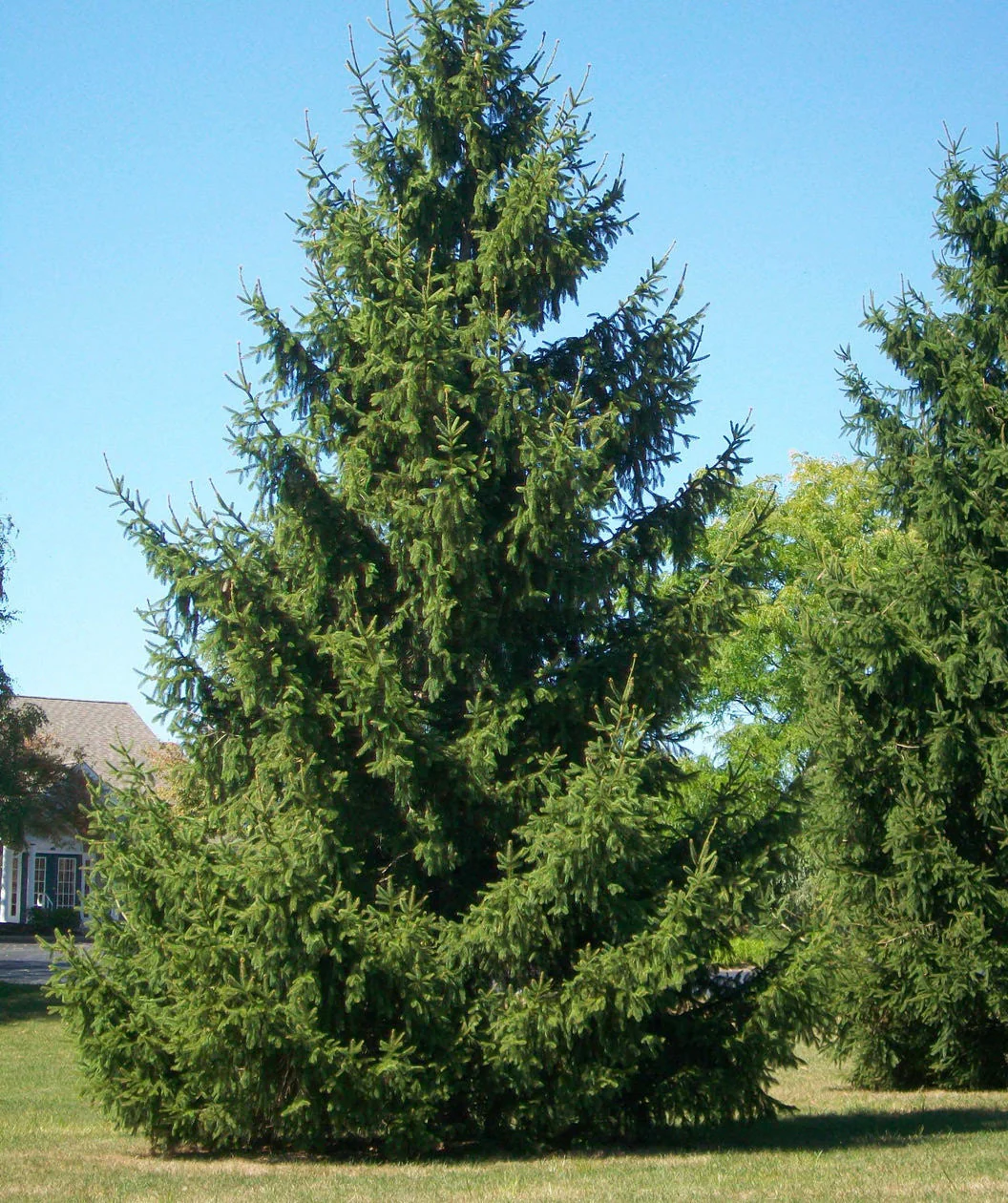
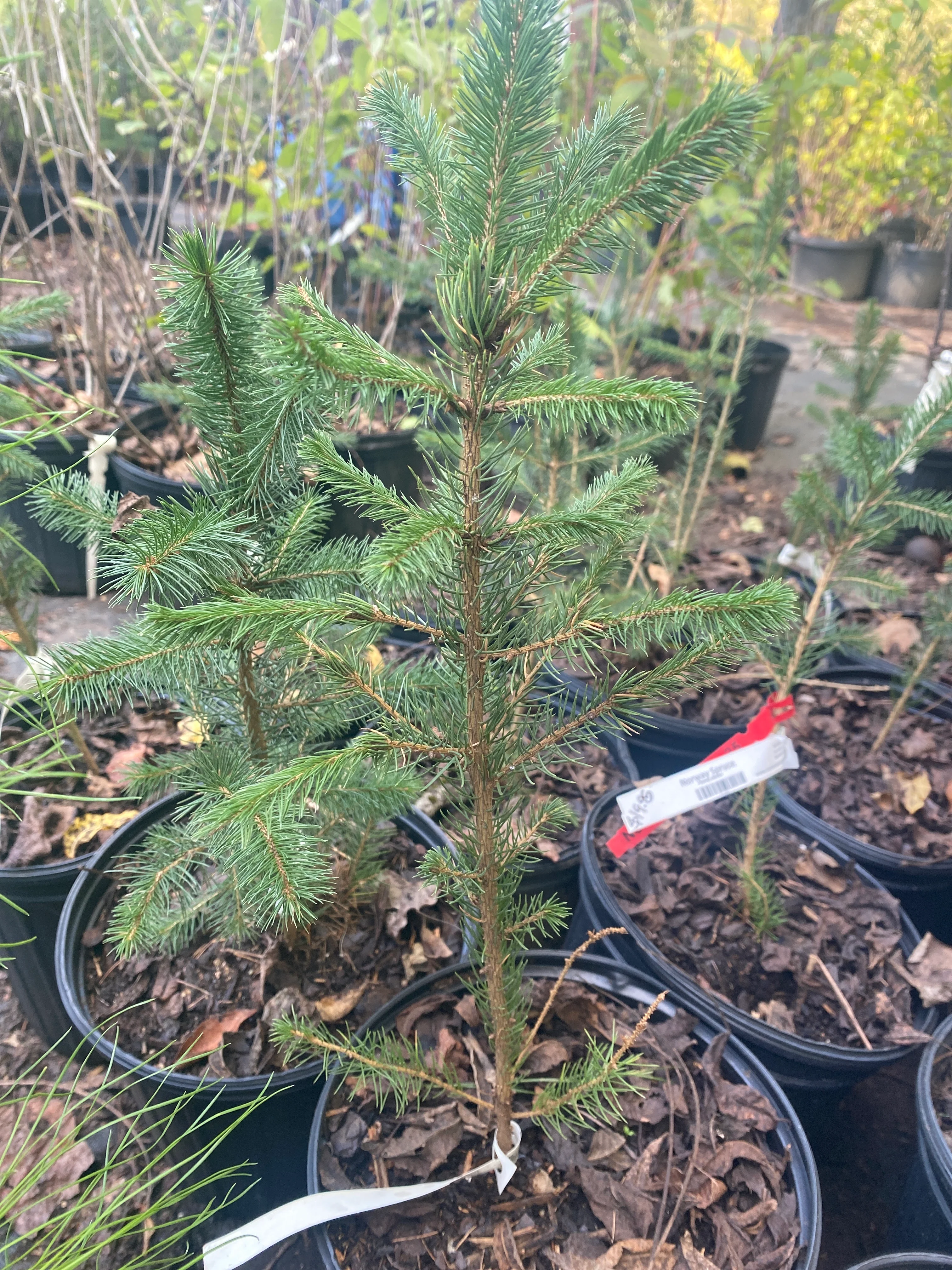
The Norway spruce is a popular evergreen coniferous tree that is native to northern Europe. It is a fast-growing tree with dense, pyramidal crown with dark green needles. The Norway spruce is a versatile tree that can be used in a variety of landscape settings. It is a hardy tree that can tolerate cold winters and poor soils. It is also a relatively low-maintenance tree, making it a good choice for busy homeowners. It is a popular choice for Christmas trees, windbreaks, and hedges.
Native Range: Northern Europe
Sun Requirements: Full sun to partial shade
Soil Moisture: Moist, well-drained soil
Mature Height: 100 feet
Mature Width: 30 feet
Bloom Time: May-June
Bloom Color: Cones are green when immature, turning brown at maturity
Tree Pollination: Norway spruces are monoecious, meaning that they have both male and female flowers on the same tree. However, they are also self-incompatible, meaning that they cannot pollinate themselves. In order to produce cones, Norway spruces must be cross-pollinated by another Norway spruce.
Product Information
Product Information
Shipping & Returns
Shipping & Returns
Description
The Norway spruce is a popular evergreen coniferous tree that is native to northern Europe. It is a fast-growing tree with dense, pyramidal crown with dark green needles. The Norway spruce is a versatile tree that can be used in a variety of landscape settings. It is a hardy tree that can tolerate cold winters and poor soils. It is also a relatively low-maintenance tree, making it a good choice for busy homeowners. It is a popular choice for Christmas trees, windbreaks, and hedges.
Native Range: Northern Europe
Sun Requirements: Full sun to partial shade
Soil Moisture: Moist, well-drained soil
Mature Height: 100 feet
Mature Width: 30 feet
Bloom Time: May-June
Bloom Color: Cones are green when immature, turning brown at maturity
Tree Pollination: Norway spruces are monoecious, meaning that they have both male and female flowers on the same tree. However, they are also self-incompatible, meaning that they cannot pollinate themselves. In order to produce cones, Norway spruces must be cross-pollinated by another Norway spruce.