Elderberry, Wyldewood
Elderberry, Wyldewood (Sambucus nigra subsp. canadensis ‘Wyldewood’)
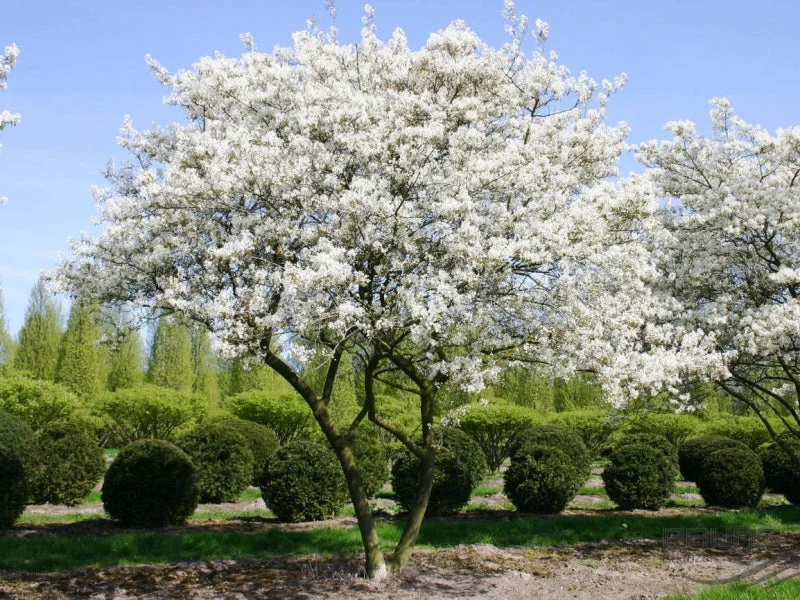
Wyldewood elderberry is a high-yielding American elderberry variety known for its large berry clusters, strong vigor, and consistent production. Selected in Oklahoma for performance and reliability, it produces abundant crops of dark, antioxidant-rich berries ideal for syrup, wine, and medicinal use. Its upright growth and heavy fruit set make it a cornerstone variety for both home growers and small-scale production systems.
Key Characteristics
Heavy yields of large, uniform berry clusters
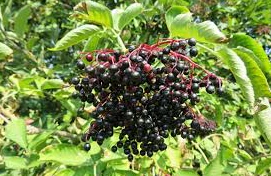
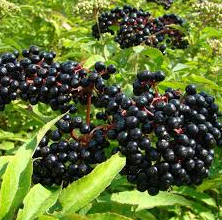
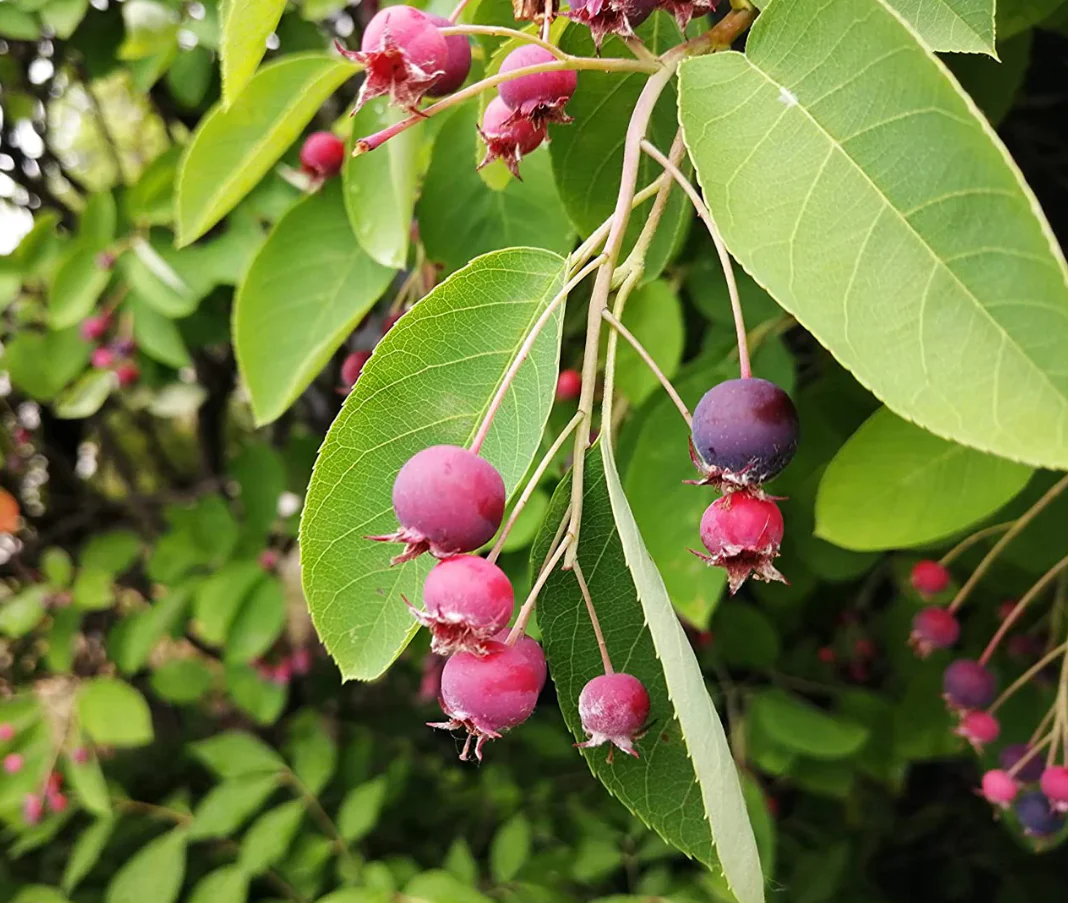
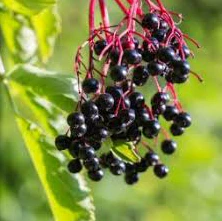
Wyldewood is known for producing exceptionally large clusters of deep purple-black berries. These fruits are rich in antioxidants and are widely used for syrups, jams, wines, and herbal preparations. As with all elderberries, the berries should be cooked before consumption.
Medicinal flowers and berries for immune support
Both the flowers and berries are valued in traditional herbal medicine. Flowers are used in teas and infusions for colds and fevers, while berries are processed into syrups and extracts for immune support. This dual harvest makes it especially useful in medicinal gardens.
Vigorous, upright growth for easy management
Wyldewood tends to grow more upright than some other elderberry varieties, making it easier to manage, prune, and harvest. Its strong structure supports heavy fruit loads, and annual pruning encourages productive new growth.
Excellent for food forests, hedgerows, and pollinator systems
This variety integrates well into food forests, hedgerows, and riparian plantings. It provides nectar for pollinators, habitat for birds, and performs well in moist soils. Its dense growth also contributes to erosion control and multifunctional landscape design.
- Native range: Eastern and Central North America (cultivar selection)
- Plant life cycle: Perennial shrub
- Sun requirements: Full sun to partial shade
- Soil requirements: Medium to medium-wet (tolerates wet soils)
- Mature height: 6–10 feet
- Bloom time: June – July
- Bloom color: White
- USDA Hardiness zones: 4–9
For best results, plant in full sun with adequate moisture and space to spread. Pair with another elderberry variety such as ‘Bob Gordon’ or ‘Ranch’ for improved pollination and higher yields. Prune annually to maintain vigor and maximize fruit production.
Original: $17.95
-65%$17.95
$6.28Product Information
Product Information
Shipping & Returns
Shipping & Returns
Description
Elderberry, Wyldewood (Sambucus nigra subsp. canadensis ‘Wyldewood’)
Wyldewood elderberry is a high-yielding American elderberry variety known for its large berry clusters, strong vigor, and consistent production. Selected in Oklahoma for performance and reliability, it produces abundant crops of dark, antioxidant-rich berries ideal for syrup, wine, and medicinal use. Its upright growth and heavy fruit set make it a cornerstone variety for both home growers and small-scale production systems.
Key Characteristics
Heavy yields of large, uniform berry clusters
Wyldewood is known for producing exceptionally large clusters of deep purple-black berries. These fruits are rich in antioxidants and are widely used for syrups, jams, wines, and herbal preparations. As with all elderberries, the berries should be cooked before consumption.
Medicinal flowers and berries for immune support
Both the flowers and berries are valued in traditional herbal medicine. Flowers are used in teas and infusions for colds and fevers, while berries are processed into syrups and extracts for immune support. This dual harvest makes it especially useful in medicinal gardens.
Vigorous, upright growth for easy management
Wyldewood tends to grow more upright than some other elderberry varieties, making it easier to manage, prune, and harvest. Its strong structure supports heavy fruit loads, and annual pruning encourages productive new growth.
Excellent for food forests, hedgerows, and pollinator systems
This variety integrates well into food forests, hedgerows, and riparian plantings. It provides nectar for pollinators, habitat for birds, and performs well in moist soils. Its dense growth also contributes to erosion control and multifunctional landscape design.
- Native range: Eastern and Central North America (cultivar selection)
- Plant life cycle: Perennial shrub
- Sun requirements: Full sun to partial shade
- Soil requirements: Medium to medium-wet (tolerates wet soils)
- Mature height: 6–10 feet
- Bloom time: June – July
- Bloom color: White
- USDA Hardiness zones: 4–9
For best results, plant in full sun with adequate moisture and space to spread. Pair with another elderberry variety such as ‘Bob Gordon’ or ‘Ranch’ for improved pollination and higher yields. Prune annually to maintain vigor and maximize fruit production.